
Last updated November 24, 2026
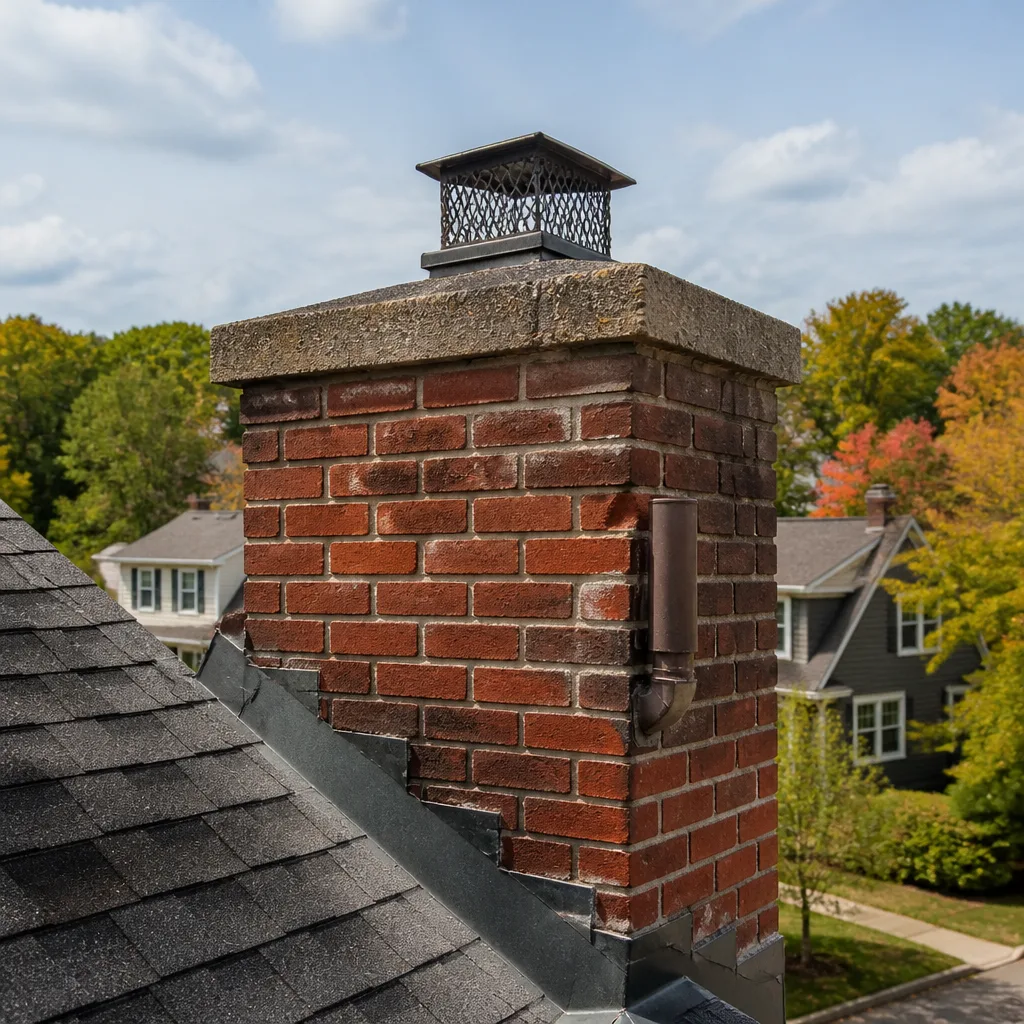 Sweep & inspection
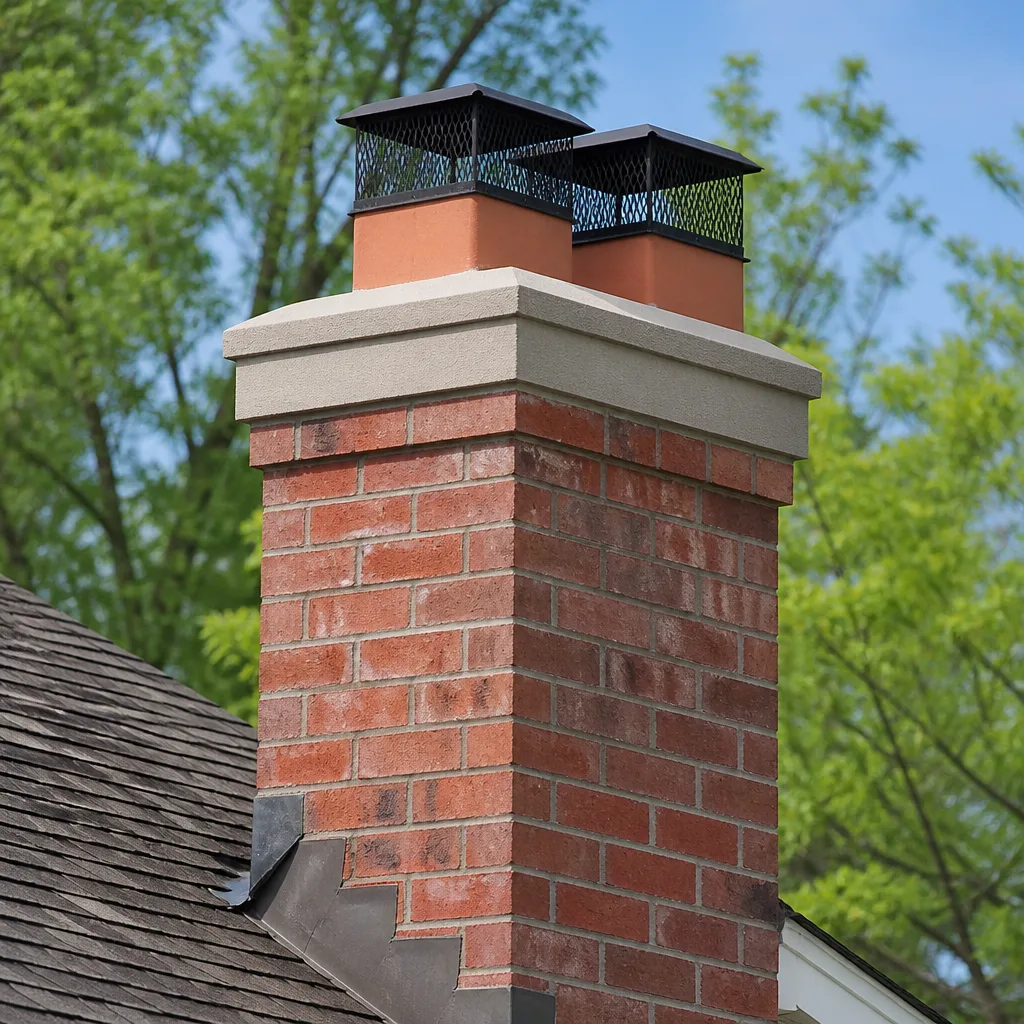 Caps & crowns
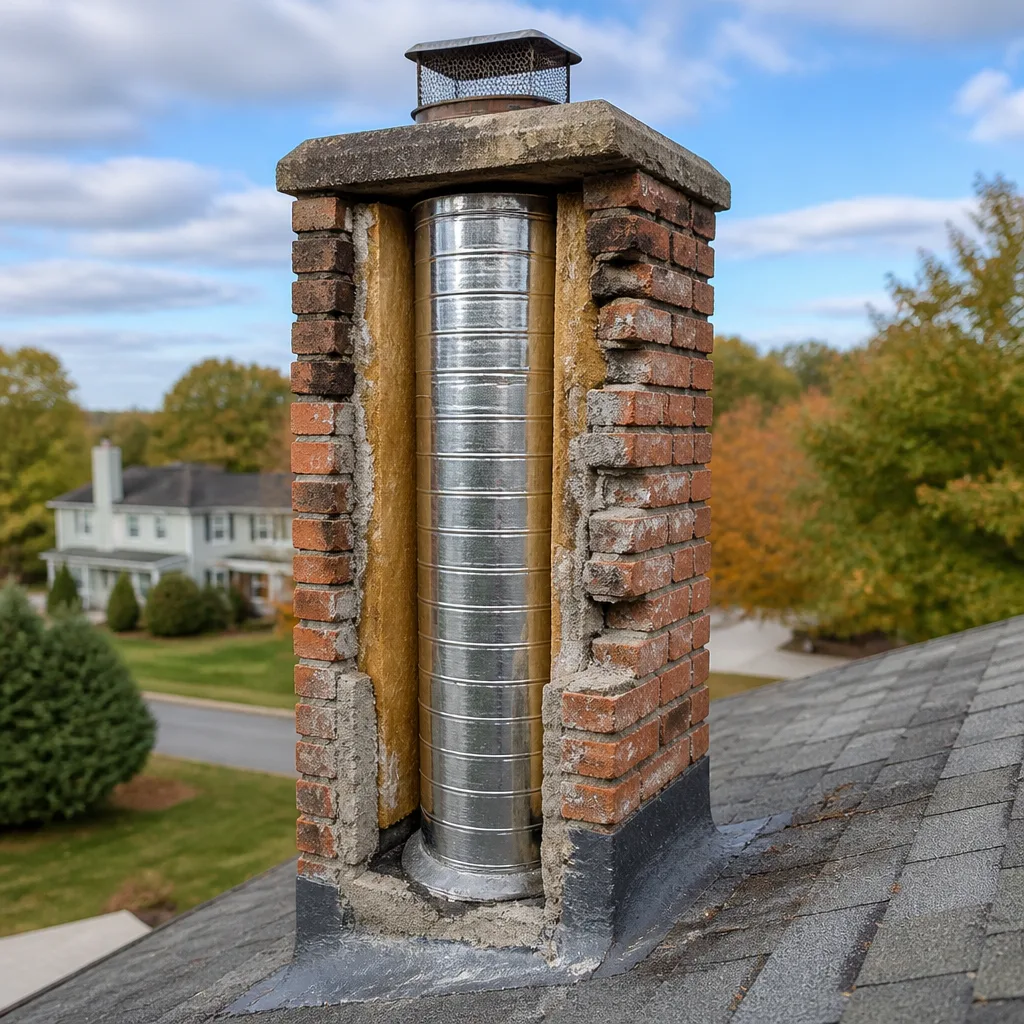 Flue relining
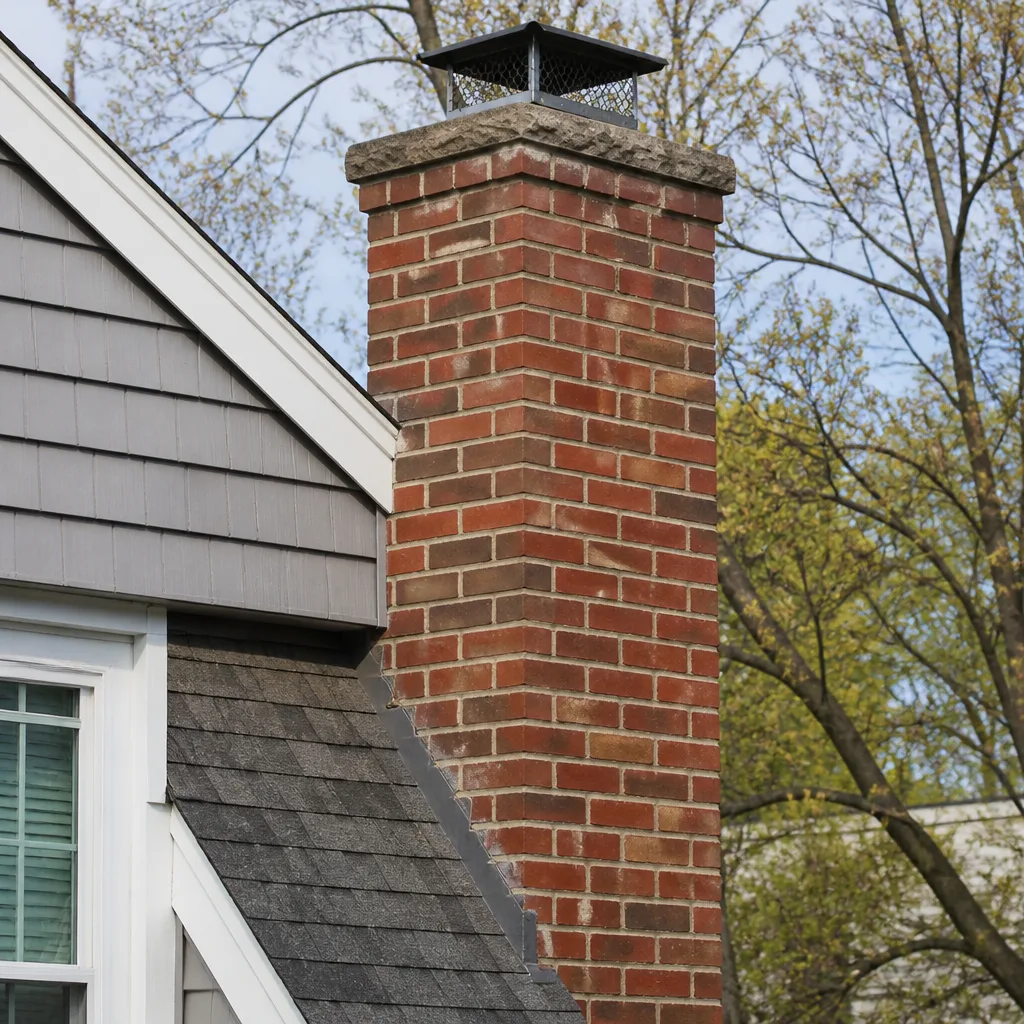 Masonry repair
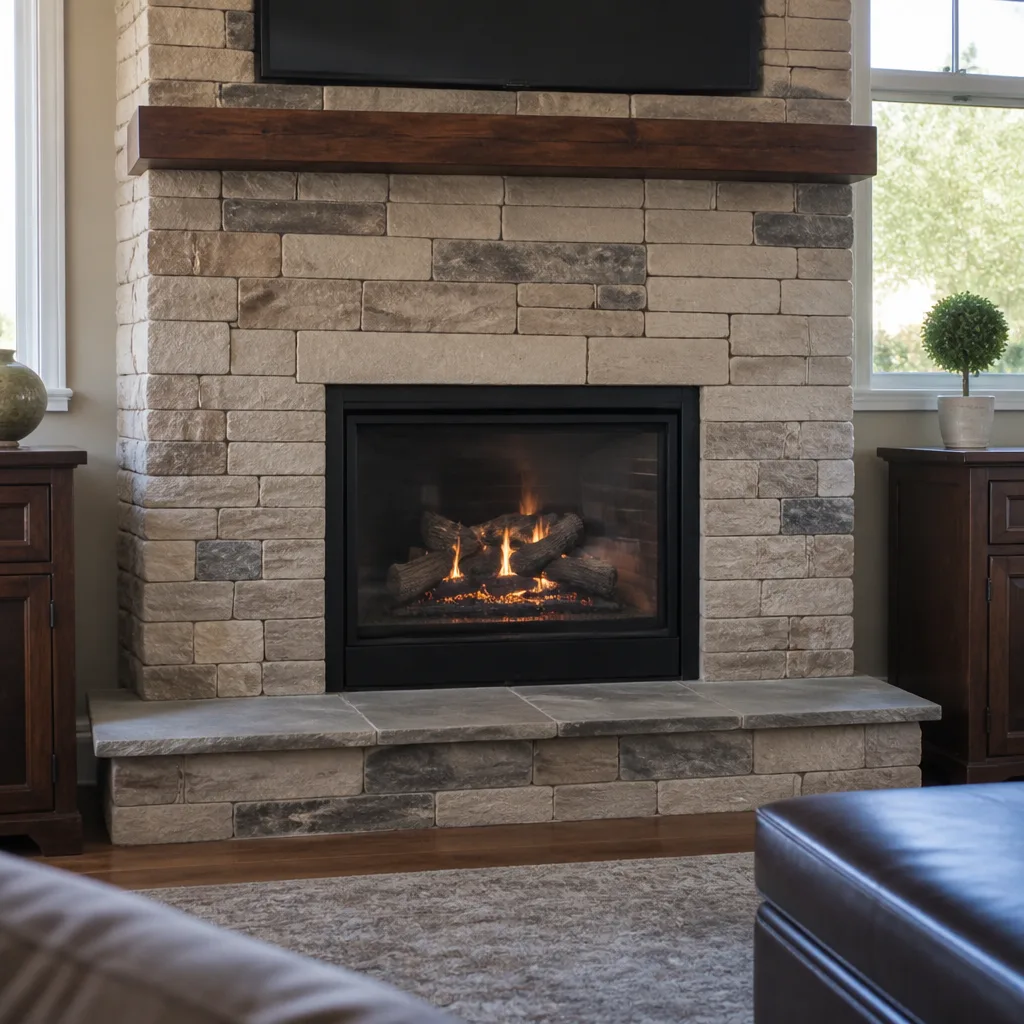 Gas fireplace service
Level 1 sweep and inspection to the NFPA 211 annual standard - flue, crown, cap, and flashing checked and photographed
Chimney sweep logs do not sweep chimneys. They loosen some creosote - which then falls where a brush and vacuum still have to collect it.
Chimney Cleaning Warning Signs: A Memorial Homeowner’s Reference Guide
Most homeowners in Memorial think they know what a dirty chimney looks like. They picture soot on the damper, maybe a little creosote flaking off the firebox walls, and they figure a cleaning will sort it out. What they miss is that the warning signs a chimney gives you are rarely about dirt. A stain on the ceiling, a draft that shows up in August, a smell that lingers weeks after the last fire – each of those points to a specific mechanical or structural failure. Cleaning alone won’t fix any of them. This guide teaches you to read those symptoms diagnostically, so you know what you’re actually looking at before anyone shows up at your door.
Quick Answer
The warning signs that matter most in Memorial are: white staining on exterior masonry, smoke rolling back into the room, a damper that won’t seat, cracked or spalled firebox brick, a persistent creosote or mold odor, and visible soot streaks above the firebox opening. Each one points to a specific failing component – damper, liner, crown, or masonry – and none are resolved by sweeping alone. A formal chimney inspection is what tells you which failure you have and whether it can safely wait.
Styles & brands we work with
- Sweep & inspection
- Caps & crowns
- Flue relining
- Masonry repair
- Gas fireplace service
Table of Contents
- Decoding Odors: Creosote, Mold, or Animals
- White Staining on Exterior Masonry
- Smoke Rollout: Damper Seating vs. Liner Obstruction
- Cracked or Spalled Firebox Interior
- Warning Signs Specific to Gas Logs
- Structural Warning Signs Above the Roofline
- A Diagnostic Walkthrough: Reading Your Chimney in Order
- What a Real Chimney Inspection Covers
Decoding Odors: Creosote, Mold, or Animals
A smoky smell in your living room on a hot August day with the fireplace sealed shut isn’t a draft quirk. It’s usually a sign your damper is failing and your flue may be drawing air from the wrong direction. But not every odor means the same thing, and treating them as interchangeable is how homeowners end up paying for the wrong fix.
There are three distinct odor sources in a chimney, and each requires a different resolution:
- Creosote odor is a sharp, tar-like, woodsmoke smell. It’s strongest in warm, humid weather when the flue reverses and pushes the smell down into the house. Creosote is a normal byproduct of wood burning, but a heavy deposit is a fire hazard and needs to be swept. If the smell persists after a sweep, the glaze layer may need chemical treatment or liner resurfacing.
- Mold odor is musty, damp, and earthy – closer to a basement smell than a campfire smell. Mold in a chimney means water is getting in through the crown, flashing, or masonry joints. Sweeping won’t fix mold because mold is a water problem, not a soot problem. The source of the moisture has to be sealed first.
- Animal odor is acrid and unmistakably biological. Birds, squirrels, and raccoons get into uncapped flues and nest on the smoke shelf. The smell intensifies when the fire is lit because the nest material smolders. A chimney cap & crown installation is the permanent fix – a cap stops the next animal before it nests.
In Memorial, where summers run long and humid, creosote reversal is the most common odor complaint we hear. The humidity doesn’t cause the smell, but it makes an existing deposit far more noticeable. If you smell smoke with no fire burning, the first question is always whether the damper is actually closed and seating correctly.
White Staining on Exterior Masonry
That chalky white powder on the outside of your chimney isn’t cosmetic weathering. It’s called efflorescence, and it’s a diagnostic signal of water migrating through the masonry. The water dissolves salts inside the brick and mortar, carries them to the surface, and leaves them behind as the moisture evaporates. Where the water is getting in – and where it’s going – is the real question.
Efflorescence in Memorial usually traces to one of three sources:
- A failing crown. The crown is the concrete cap at the very top of the chimney. Its job is to shed water away from the masonry below. When it cracks, water runs into the chimney body instead of off it. Efflorescence appearing near the top of the stack is the classic sign.
- Deteriorated mortar joints. Mortar is softer than brick and weathers faster. When joints recede, water finds the gaps. Staining that appears in horizontal bands along the mortar lines is the tell.
- Missing or failed flashing. The metal flashing that seals the chimney to the roof is a common leak point. Staining near the roofline where the chimney meets shingles usually means flashing, not masonry.
Left alone, efflorescence progresses. The salt crystals expand as they form and slowly spall the brick face – meaning the surface flakes and pits. What starts as a stain becomes structural deterioration. A formal inspection catches the source early, before the masonry needs rebuilding. Cap and crown work is often the whole fix when the diagnosis points upward.
Smoke Rollout: Damper Seating vs. Liner Obstruction
Smoke rolling into the room is the warning sign homeowners describe most vividly and diagnose least accurately. There are two very different causes, and they call for different scopes of work. Getting them confused means either paying for a liner job you didn’t need or ignoring a liner failure you can’t see.
A damper seating problem shows up as smoke that puffs out when you first light the fire and settles once the flue warms. The damper plate doesn’t sit flush, or the frame is warped, or the linkage has slipped. The flue itself is clear. Smoke finds the path of least resistance around the plate instead of up the chimney.
A liner obstruction shows up as smoke that keeps rolling regardless of how hot the fire gets, or that gets worse over weeks. The cause is a physical blockage – a heavy creosote deposit, a collapsed liner section, a bird nest, or a disconnected liner joint. The flue can’t pull enough draft past the blockage, so the smoke backs up into the room.
Here’s the sequence that tells the two apart:
- Open a window near the fireplace. If the smoke improves immediately, the flue is undersized or obstructed, not the damper.
- Shine a light up the flue from the firebox. A visible dark shoulder partway up is a deposit or obstruction. A warped damper plate at the top of the firebox is a seating issue.
- Note the timing. A damper problem announces itself at light-off. A liner obstruction gets worse the longer the fire burns.
None of this substitutes for a camera inspection, which shows the whole flue interior and tells you which failure you actually have. In Memorial, we treat smoke rollout as a first-priority call because it can indicate a liner problem that’s been developing for more than one season. A chimney sweep clears deposits, but if the liner itself is compromised, sweeping won’t solve the draft.
Cracked or Spalled Firebox Interior
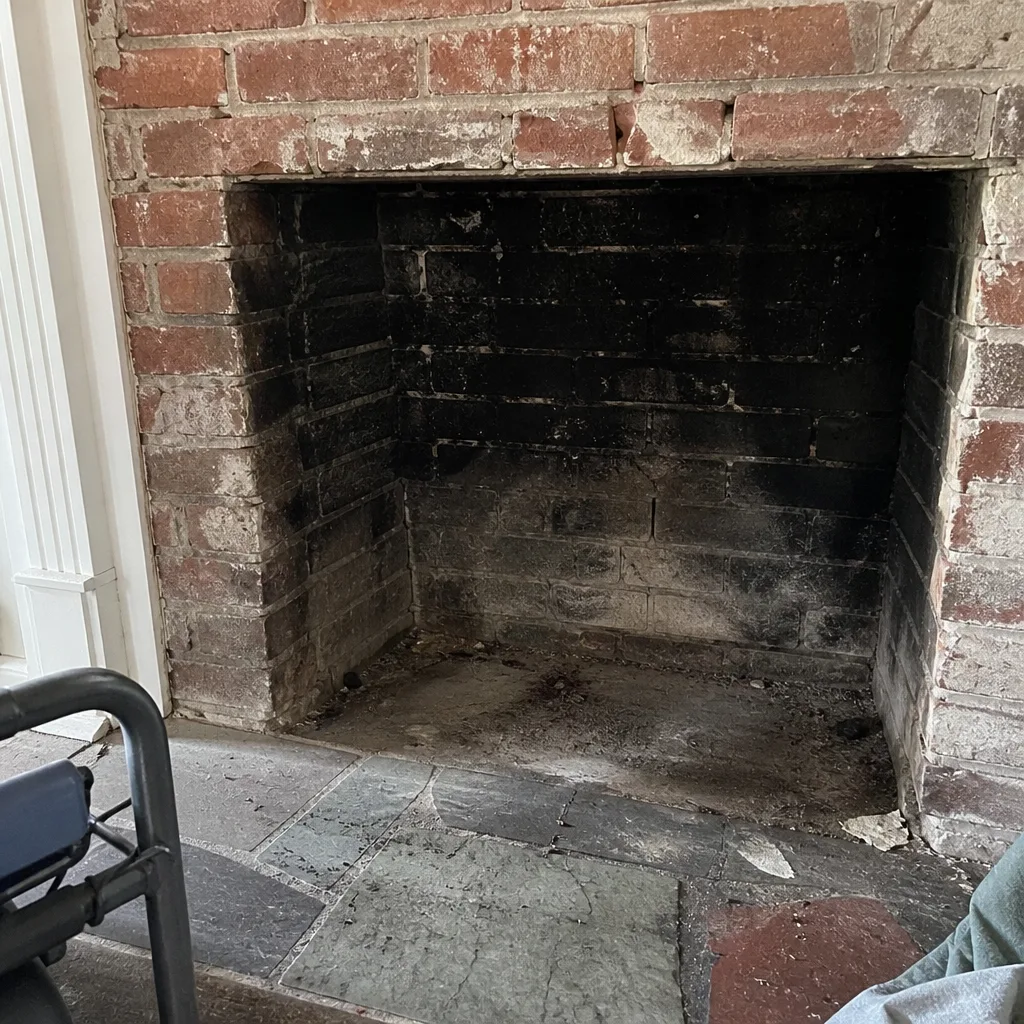
A crack in the firebox brick looks like an aesthetic blemish. It isn’t. The firebox is the containment structure for the fire, and its mortar joints and brick are what keep heat and combustion gases from migrating into the surrounding structure. When the firebox interior fails, that containment fails with it.
What to look for on the inside of the firebox:
- Vertical or stair-step cracks in the brick – these widen over time and let heat reach the structure behind the firebox.
- Receded or crumbling mortar joints – when the mortar erodes, gases can pass through the joints and into the wall cavity.
- Spalling – the brick face flaking or pitting, which signals heat damage and moisture cycling.
- White or gray deposits on the firebox walls – these can indicate combustion gas escaping through the masonry rather than going up the flue.
This is a combustion safety issue, not cosmetics. A failed firebox can let carbon monoxide and heat into parts of the house it was never meant to reach. Fireplace repair is not a cosmetic upgrade – it restores the containment boundary. In Memorial, where many homes have active wood-burning fireplaces that see regular use through the cooler months, firebox deterioration is a common finding during inspection. It’s also one of the most overlooked, because the damage is inside the fire and out of sight unless you deliberately look.
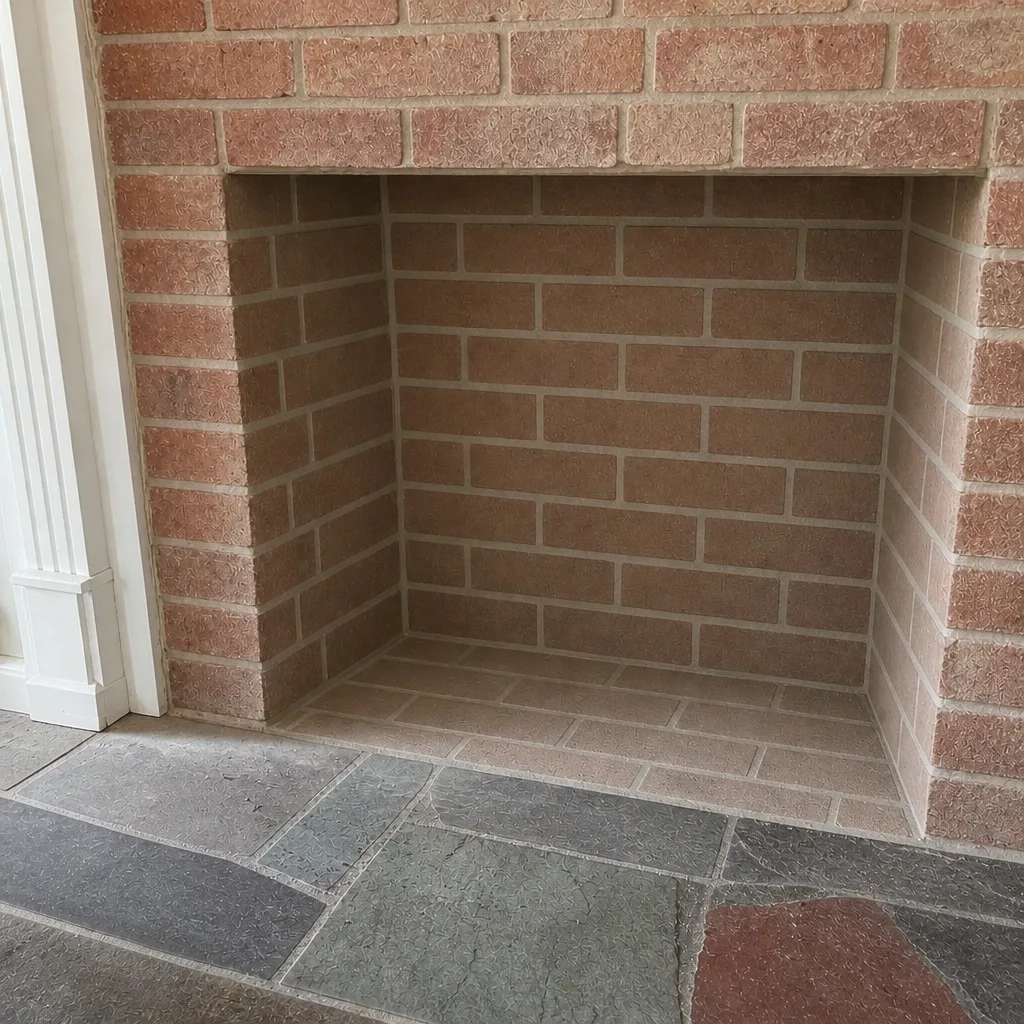
We use HeatShield resurfacing for fireboxes and flues with deteriorated masonry liners. It’s a specialized application that rebuilds the liner surface rather than patching over it – well beyond what a generalist contractor can offer, and not something available at a retail store. That’s the distinction between a real chimney specialist and a generalist with a brush.
Warning Signs Specific to Gas Logs
Gas logs are where the warning signs get dismissed as normal appliance behavior. A slight odor, a flicker, a bit of soot near the logs – homeowners assume it’s just how gas logs work. It usually isn’t, and some of these signs have real safety implications.
- A persistent gas smell after the logs are off – even faint, this can mean a leaking connection or a valve that isn’t fully seating. A professional should check it, not a homeowner with a wrench.
- Soot or dark deposit on the logs and firebox – vented gas logs should burn clean. Soot indicates incomplete combustion, which can point to a blocked vent, an undersized flue, or incorrect log placement.
- Flames that lift, dance erratically, or show yellow-to-orange tips – a healthy vented gas log burns with a soft blue base. Erratic flame can mean a draft problem or a venting issue.
- Excess moisture on the firebox interior – gas combustion produces water vapor. If the venting isn’t working, that moisture condenses inside the firebox and can rust out the damper and firebox components.
- A musty or damp smell near a gas fireplace that’s been unused – often a sign that the flue is pulling air from the wrong direction, or that the damper is failing and letting outside air in.
The trap with gas logs is that there’s no creosote, so it’s easy to assume the chimney doesn’t need attention. It still does. A vented gas log flue can accumulate deposits from condensation and corrosion, and the venting system needs inspection like any other chimney. In Memorial, gas inserts are common alongside wood-burning fireplaces, and it’s worth having both checked at the same time.
Structural Warning Signs Above the Roofline
Some of the most serious chimney warning signs are visible from the ground, before you ever light a fire. They’re structural, and they point to masonry problems that progress far faster than most homeowners expect.
- A leaning or tilting chimney stack. Chimneys are freestanding columns and they don’t lean unless the foundation or the masonry has shifted. This is a structural call.
- Cracks that run through the brick itself (not just the mortar joints). Cracks through brick mean movement, not settling.
- A rusted or missing chimney cap. A cap is the first line of defense against rain, animals, and debris. When it’s gone, water enters the flue directly.
- Rusted chimney flashing or torn sealant – a leak point at the roofline that shows up as stains on the ceiling below.
- A cracked crown with visible separation – water then enters the chimney body every time it rains.
- Efflorescence or white staining near the top third of the stack – the water migration pattern described earlier, which progresses into spalling if left alone.
In Memorial’s climate, the mild winters actually work against homeowners here. Without a hard freeze to test the masonry each year, deterioration happens slowly and invisibly. The chimney doesn’t announce its problems with dramatic cracking the way it would in colder markets. It just produces a stain, a smell, or a draft, and waits for someone to notice.
A Diagnostic Walkthrough: Reading Your Chimney in Order
When we train technicians, the diagnostic sequence is always the same. Read the signs in order, from the outside in, before you ever pick up a brush. Homeowners can run the same sequence themselves to know what they’re looking at before calling.
- Stand back and look at the roofline. Look for a leaning stack, a missing or damaged cap, cracks in the crown, and stains on the exterior masonry. Anything unusual here moves you into structural territory before you light a fire.
- Look at the siding and the ceiling below the chimney. A water stain on the ceiling directly below the chimney is usually flashing or crown, not the interior of the flue. White or rust-colored streaks on the siding near the chimney are the same signal seen from a different angle.
- Open the firebox and look up. Shine a strong light up the flue. Note any dark “shoulder” or narrowing. Check the firebox brick for cracks, receded mortar, and spalling. Look at the damper plate for a clear seat and an undamaged frame.
- Smell the firebox with the fire off. Tar smell means creosote; musty smell means moisture; acrid smell means animals. Each takes you in a different direction.
- Light a small test fire and watch the smoke. Does the smoke go up cleanly, or roll into the room? Does the rollout stop once the flue warms, or does it persist? That timing distinguishes damper seating from liner obstruction.
- For gas logs, check the log placement and the flame. A clean blue base flame is normal. Soot, erratic flame, or a persistent gas smell means it’s time for a professional to look.
That walkthrough won’t tell you everything a camera inspection will, but it tells you which of the failure patterns you’re dealing with. That’s what determines whether you’re booking a sweep, a fireplace repair, or a full liner evaluation.
What a Real Chimney Inspection Covers
A formal chimney inspection is a standalone service, not a glance during a cleaning. It’s the difference between knowing what’s inside the flue and guessing. Every inspection we perform includes a camera inspection with a photo report – you see exactly what we see, and nothing is recommended without visual evidence.
What a thorough inspection actually covers:
- The flue interior, from firebox to cap, via camera – checking for cracks, gaps, separation, and deposit thickness.
- The firebox and smoke chamber – checking for brick and mortar integrity.
- The damper assembly – checking for proper seating and function.
- The crown, cap, and flashing from the roofline.
- The exterior masonry – checking for stains, cracks, and spalling.
- The venting system if there’s a gas appliance connected.
We inspect before we repair, always. The point of the inspection isn’t to sell a job – it’s to find out whether a repair is needed now, or whether it can safely wait. A lot of the “warning signs” we see turn out to be a scheduling issue (the fireplace was never cleaned this year) rather than a structural one. We tell homeowners that when it’s true. And when the camera shows a genuine liner or firebox issue, you see the photo before you decide.
Our technicians have up to 13 years of experience, and we work with professional-grade materials from a fixed roster of chimney brands – DuraFlex, HeatShield, Gelco, Olympia Chimney, fireplace repair specialists rely on Famco and Copperfield components, and we stay within that set. We don’t source from big-box retailers because chimney systems have specific material requirements that retail products weren’t designed for. When the inspection shows a liner failure, the repair is done with DuraFlex stainless steel relining systems or HeatShield resurfacing, depending on the condition of the masonry. That’s the level of scope the job needs.
Common Mistakes to Avoid
- Treating a stain on the ceiling as a paint problem. A water stain on the ceiling directly below a chimney almost always traces to the flashing or crown, not to interior moisture. Painting over it hides the evidence and leaves the leak running.
- Assuming a smell means a sweep is due. Creosote smell is a sweep issue, but mold smell is a water intrusion issue and animal smell is a cap issue. Getting the diagnosis wrong means paying for work that doesn’t solve the problem.
- Skipping the inspection because the chimney “was just cleaned.” A sweep clears deposits; it doesn’t evaluate the liner, crown, firebox, or flashing. Cleaning and inspecting are separate services, and both matter.
- Reading smoke rollout as a smoke damage problem instead of a draft problem. Smoke rolling into the room means the flue isn’t pulling correctly. That’s a damper or liner diagnosis, not a cleaning and air fresh.
- Ignoring gas log signs because there’s no creosote. A gas insert still has a venting system that can fail. Soot, erratic flame, and persistent gas odor are all signals that need professional attention.
- Waiting until the first cold weekend to book a sweep. In Memorial, the cooler months are the busiest time for chimney work. Warning signs don’t get better with a month of waiting – a cracked crown lets in more water every time it rains.
- Letting a contractor with a brush do liner work. Cap and crown installation, firebox repair, and liner relining require material and method knowledge a generalist doesn’t have. If the diagnosis points to structural repair, the contractor needs to be a chimney specialist.
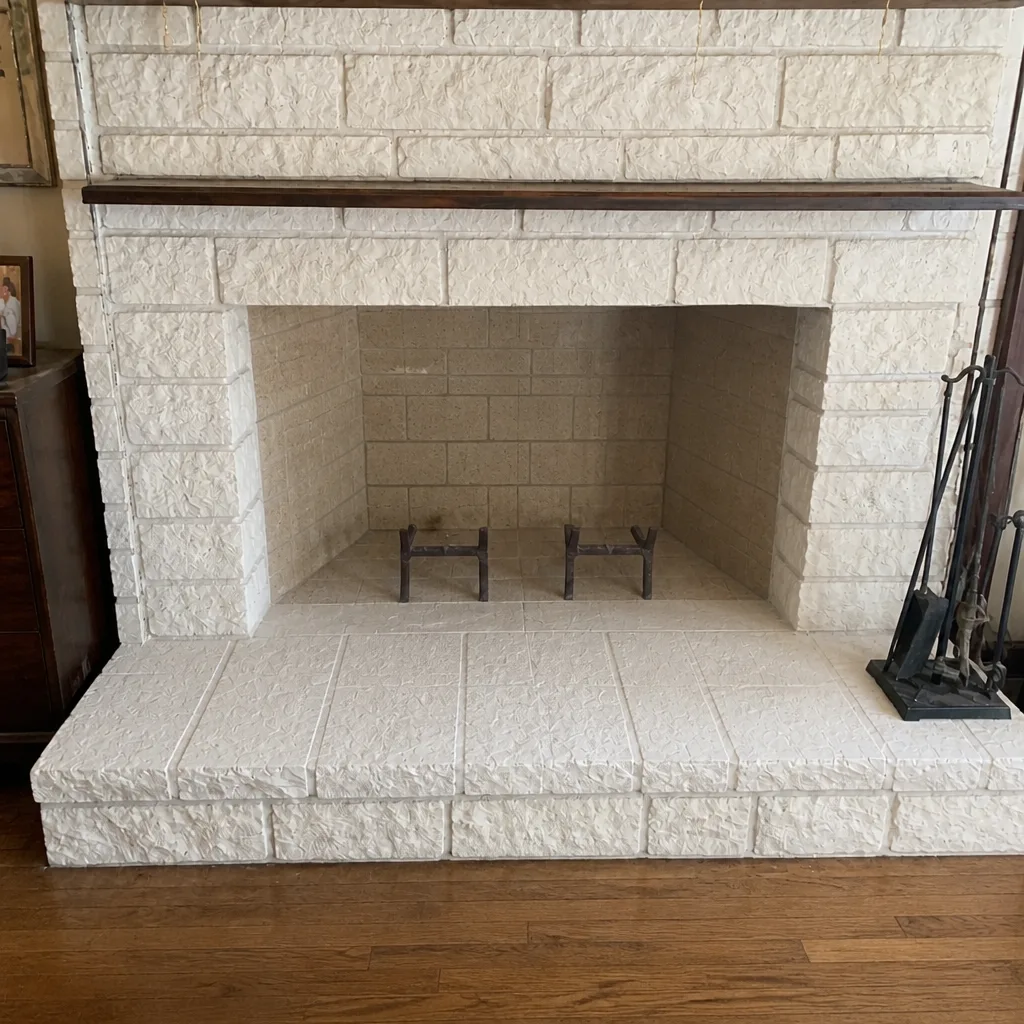
See the difference
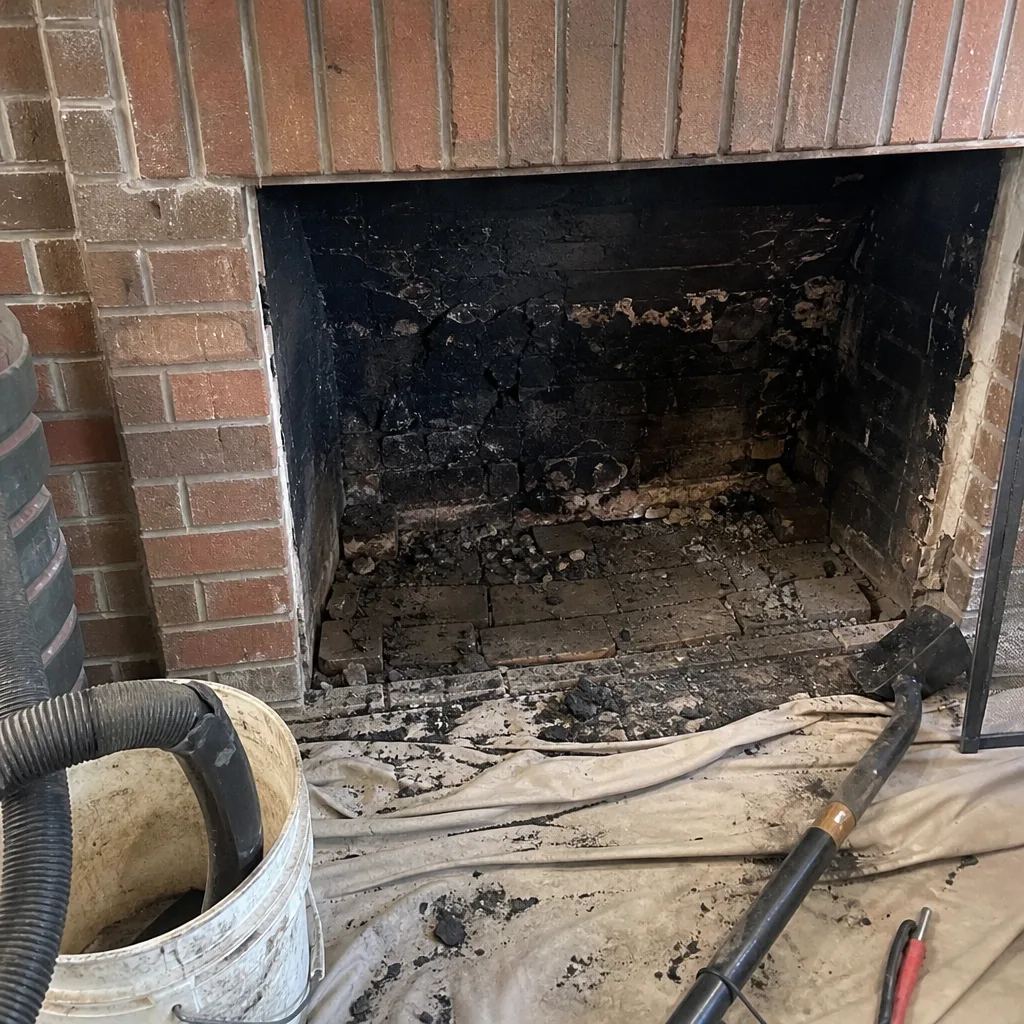 Before
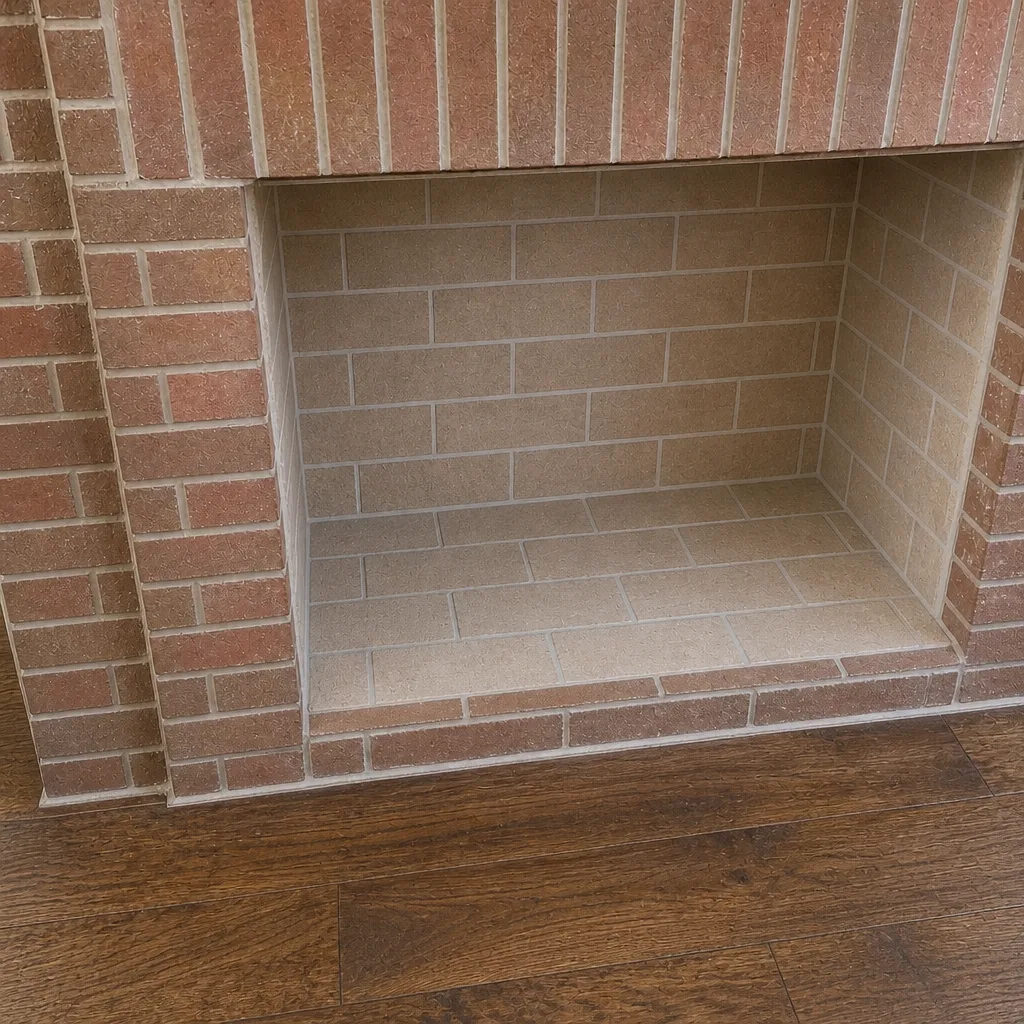 After
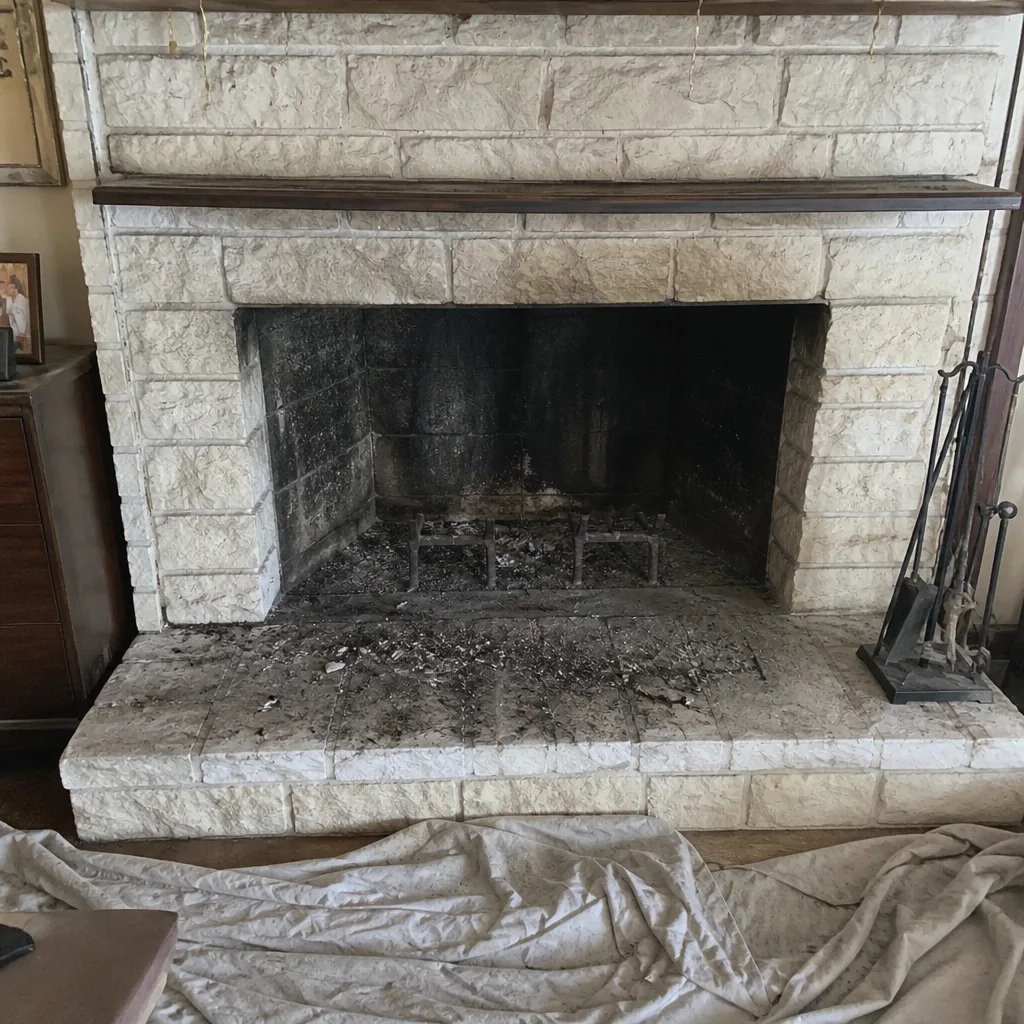 Before
 After
 Before
 After
When to Call a Professional
Call a professional chimney specialist when you notice any of the following: smoke rolling into the room when the fire is lit, a persistent odor with no fire burning, white staining on exterior masonry, visible cracks in the firebox brick, a leaning or damaged chimney stack from the ground, or any sign of gas leak or soot on a gas log system. Also call if it’s been more than a year since the last sweep – creosote deposits build quietly and the first sign is often a smell that has nothing to do with burning wood. A sweep is a preventive service, not a reaction to a crisis. Chimney Sweep Memorial offers free estimates in Memorial – call (833) 509-5352. We answer 24/7. Fast dispatch from 7am to 7pm, Sunday through Friday.
Frequently Asked Questions
Once per year for a fireplace in regular use, and more often if you burn frequently through the cooler months. Creosote deposits build up based on how much you burn, not how long it’s been. If you notice a smoky smell or soot streaks near the damper, it’s worth booking a sweep regardless of how recently the last one was. Call (833) 509-5352 to schedule – estimates are free.
Yes. White staining, called efflorescence, means water is moving through the masonry and depositing salts on the surface as it evaporates. The stain itself isn’t the problem – the water migration is, and it will slowly spall the brick if the source isn’t sealed. Call (833) 509-5352 for an inspection to trace the source.
That depends on what the camera shows. A clear, intact liner just needs a sweep. A liner with cracks, gaps, separation, or heavy glaze deposits needs resurfacing or relining, and cleaning alone won’t fix it. We never recommend liner work without showing you the photo evidence first. Call (833) 509-5352 for an inspection and quote – the estimate is free.
No. A gas fireplace should not produce a persistent smell after the logs are off. Even a faint gas odor can mean a leaking connection or a valve that isn’t fully seating. Soot on the logs or an erratic flame is a combustion signal. Have it checked before you use it again. Call (833) 509-5352.
That’s usually damper failure combined with warm-weather draft reversal, and it’s very common in Memorial. The flue pulls air down instead of up, and any creosote deposit on the firebox walls sends smoke smell into the room. It sounds minor, but it’s often the first sign of a damper that won’t seat. Call (833) 509-5352 to have it looked at.
Most of the time, nothing dramatic – the chimney keeps working and the warning signs stay mild. The risk is the one you can’t see: a liner crack that widens, a crown that lets in more water each season, or a firebox joint that stops containing heat and gas. The inspection exists to tell you which of those is happening and whether it can safely wait. Call (833) 509-5352 for an inspection and a written report – the estimate is free.
The Bottom Line
Chimney warning signs aren’t cosmetic, and they’re rarely solved by a cleaning alone. A stain on the ceiling is a water problem, a smoky smell is a draft problem, a cracked firebox is a containment problem, and a leaning stack is a structural problem. Read symptoms diagnostically – outside first, then the firebox, then the flue, then the smell – and you’ll know which failure you’re looking at before anyone shows up. In Memorial, the mild winters hide deterioration rather than reveal it, so the earlier you read the sign, the more likely the fix is a small one. At Chimney Sweep Memorial, we inspect before we repair, and nothing is recommended without camera evidence you’ve seen yourself.
If any sign in this guide matches what you’re seeing at home, don’t wait for the first cold weekend. Call (833) 509-5352 for a free estimate. We answer 24/7. Fast dispatch from 7am to 7pm, Sunday through Friday.
Written by the team at Chimney Sweep Memorial.